
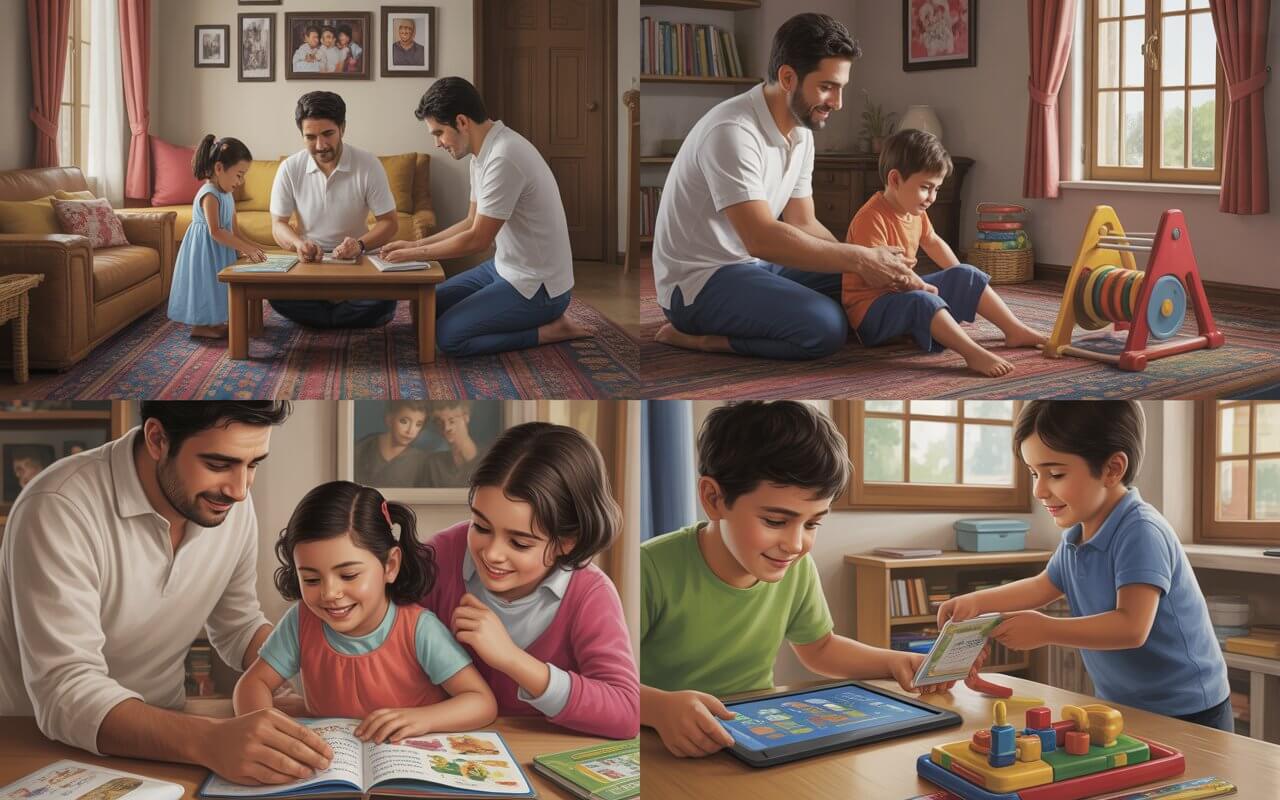
Pakistani Parenting Mistakes: 7 Common Errors in Modern Households
Parenting in Pakistan is deeply rooted in tradition, culture, and societal expectations. While parents strive to provide the best for their children, certain common mistakes can unintentionally hinder a child’s growth and development. Understanding these pitfalls is essential for modern families who aim to nurture confident, capable, and well-rounded children.
This article explores 7 parenting mistakes common in Pakistani households, highlighting issues such as comparison culture, fear-based control, and their long-term impact on children. Recognizing and correcting these mistakes is crucial for raising resilient, empathetic, and skilled individuals who can contribute to a Mazboot Pakistan.
-
Overemphasis on Academic Grades
One of the most prevalent Pakistani parenting mistakes is placing excessive importance on academic grades. Many parents focus solely on marks while neglecting creativity, critical thinking, emotional intelligence, and other essential skills.
This pressure can lead to stress, anxiety, and burnout among children, stifling their curiosity and love for learning. Modern parenting approaches encourage balancing academics with hobbies, arts, and practical life skills to foster holistic development. By doing so, children can thrive both intellectually and emotionally, making this a critical aspect to address in Pakistani households.
-
Gender-Based Expectations
Traditional gender roles remain a challenge in many Pakistani families. Limiting girls to household responsibilities or boys to specific tasks can significantly hinder skills development, self-confidence, and independence.
This is another common Pakistani parenting mistake, as it restricts children from exploring diverse interests or pursuing unconventional career paths. Encouraging equal opportunities for both girls and boys, supporting education and hobbies without bias, helps cultivate a generation capable of contributing equally to society. Promoting gender equality at home also builds the foundation for a Mazboot Pakistan.
-
Lack of Open Communication
Many parents avoid discussing feelings, mistakes, or life challenges with their children. This lack of open communication creates emotional distance, making it difficult for children to share problems or seek guidance.
Ignoring this aspect is a significant Pakistani parenting mistake. Open dialogue helps children develop problem-solving skills, resilience, and confidence in expressing themselves. Families that foster trust and empathetic communication create stronger bonds and emotionally intelligent children.
-
Overprotectiveness
While protection is natural, excessive control can backfire. Parents who restrict exploration or independence prevent children from learning essential life skills such as decision-making, risk assessment, and adaptability.
Overprotectiveness is a major Pakistani parenting mistake that often stems from fear of societal judgment or safety concerns. Allowing age-appropriate freedom, supporting problem-solving, and encouraging responsible choices help children develop resilience and confidence. Balancing safety with autonomy is key to nurturing well-adjusted individuals.
-
Inconsistent Discipline
Harsh, inconsistent, or punitive discipline can confuse children about boundaries and acceptable behavior. Some parents oscillate between strict punishment and leniency, leaving children uncertain about rules.
This inconsistency is one of the most common Pakistani parenting mistakes. Effective discipline combines guidance with empathy, clear expectations, and positive reinforcement. By establishing predictable routines and consequences, children learn self-control, responsibility, and accountability.
-
Ignoring Emotional Intelligence
Focusing exclusively on academics, chores, or obedience often neglects the development of emotional intelligence. Children may struggle with empathy, patience, teamwork, and social skills if these aspects are not nurtured.
Ignoring emotional intelligence is a critical Pakistani parenting mistake. Encouraging children to recognize their own emotions, understand others’ feelings, and resolve conflicts constructively equips them to handle relationships and professional environments successfully. Emotional intelligence is essential for long-term success and well-being.
-
Limited Exposure to Modern Skills
In an increasingly digital and globalized world, neglecting modern skills such as digital literacy, coding, communication, and global awareness can leave children unprepared.
This is a common Pakistani parenting mistake, especially in households that emphasize traditional education alone. Introducing children to technology, online learning, and practical life skills ensures they remain competitive and adaptable in a rapidly changing environment. Exposure to modern skills at home complements formal education and prepares them for the future.
Long-Term Impact of These Parenting Mistakes
When unaddressed, these mistakes can have profound effects. Children may experience anxiety, lack of confidence, poor problem-solving abilities, and limited social skills. They may struggle with independence, career choices, and personal relationships. Recognizing these issues early allows parents to adjust strategies, foster healthier development, and create a supportive home environment.
By avoiding these common Pakistani parenting mistakes, families can help children grow into confident, responsible, and emotionally balanced adults, capable of thriving in modern society while honoring cultural values.
Conclusion
Parenting is a continuous learning process, and awareness of common pitfalls is the first step toward improvement. Avoiding Pakistani parenting mistakes—such as overemphasis on grades, gender-based expectations, lack of communication, overprotectiveness, inconsistent discipline, ignoring emotional intelligence, and limited exposure to modern skills—can profoundly enhance a child’s growth and future prospects.
Modern parenting in Pakistan should balance discipline with empathy, nurture confidence, encourage exploration, and integrate both traditional and contemporary values. Doing so not only benefits individual children but also contributes to stronger families and, ultimately, a Mazboot Pakistan. By learning from these mistakes and implementing positive strategies, parents can ensure their children are well-prepared for the challenges and opportunities of the 21st century.