
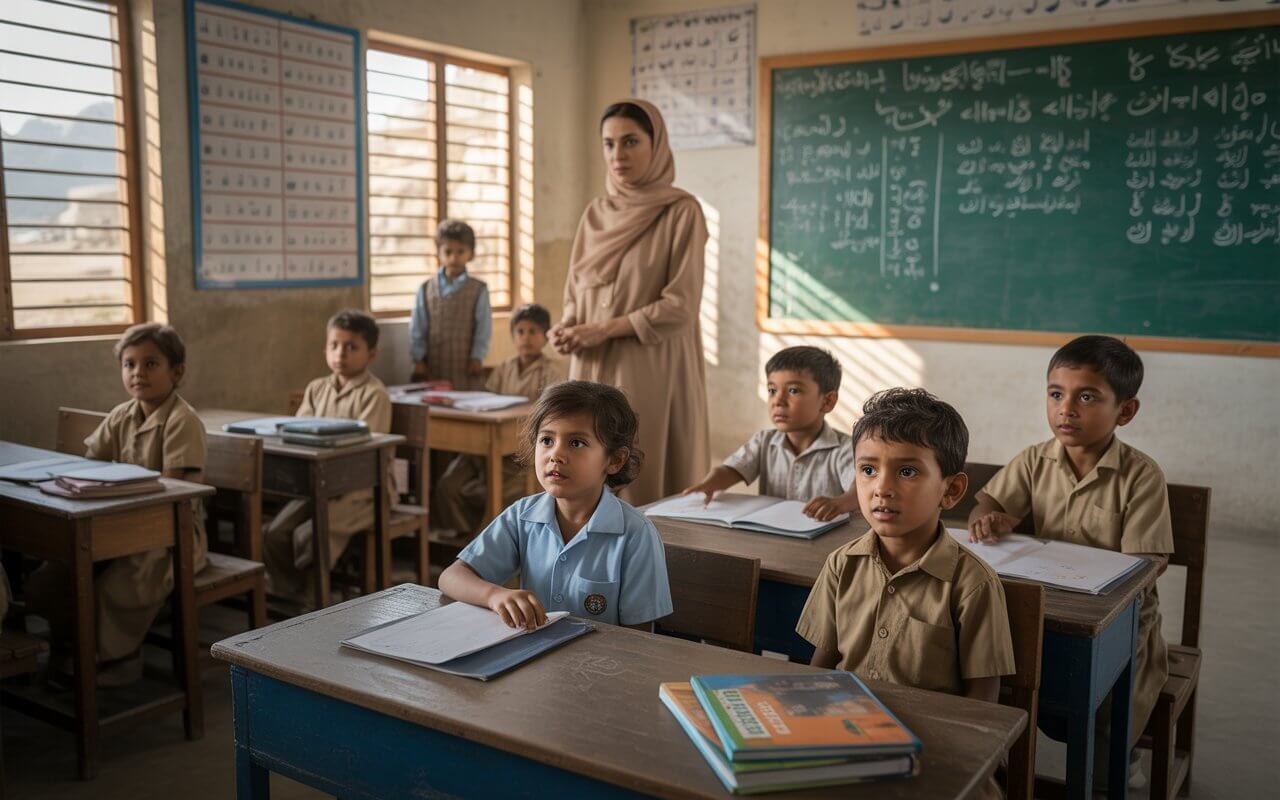
Child Education in Pakistan: 8 Education Gaps Affecting the Nation’s Future
Child education in Pakistan remains one of the most critical issues shaping the country’s long-term social and economic future. With one of the world’s youngest populations, Pakistan’s progress depends heavily on how effectively it educates its children today. While enrollment numbers have improved in recent years, deep structural and quality-related gaps continue to weaken child education in Pakistan, especially for marginalized communities.
This article explores eight major education gaps affecting child education in Pakistan, focusing on access, quality, and the vital role parents and society must play to secure a stronger future.
-
Out-of-School Children: The Largest Education Crisis
One of the biggest challenges to child education in Pakistan is the alarming number of out-of-school children. Millions of children—particularly in rural areas, informal settlements, and conflict-affected regions—are not enrolled in any educational institution.
Poverty, long distances to schools, lack of transportation, and insufficient public schools all contribute to this crisis. In many areas, parents must choose between daily survival and sending children to school. Until access improves, child education in Pakistan will remain unequal and fragile.
-
Gender Disparity in Education
Gender inequality continues to affect child education in Pakistan, especially for girls. In many regions, cultural norms, early marriages, household responsibilities, and safety concerns prevent girls from continuing their education beyond primary levels.
Although awareness has increased, girls’ enrollment and retention still lag behind boys in several districts. Without closing the gender gap, child education in Pakistan cannot achieve inclusive national development. Educating girls directly impacts health, income, and future generations.
-
Poor Quality of Teaching
Enrollment alone does not guarantee learning. A major gap in child education in Pakistan is the quality of teaching. Many schools suffer from undertrained teachers, outdated teaching methods, and limited professional development.
Rote memorization remains common, leaving children unable to apply concepts in real life. Weak teaching standards result in poor literacy and numeracy skills, even after years of schooling. Improving teacher training is essential for strengthening child education in Pakistan.
-
Infrastructure Deficiencies in Schools
Many public schools lack basic infrastructure, severely affecting child education in Pakistan. Issues such as broken classrooms, overcrowded spaces, lack of clean drinking water, missing toilets, and unreliable electricity are widespread.
These conditions discourage attendance, especially for girls, and reduce learning quality. A safe and supportive learning environment is fundamental to child education in Pakistan, yet it remains unavailable to millions of students.
-
Language Barriers in Early Education
Language complexity is another overlooked challenge in child education in Pakistan. Children often face sudden shifts between their mother tongue, Urdu, and English, especially in early grades.
This creates confusion, slows comprehension, and increases dropout rates. Without a structured multilingual approach, child education in Pakistan risks leaving children behind before they even develop basic literacy skills.
-
Digital Divide and Limited Technology Access
As digital learning expands globally, the digital divide has become a major barrier to child education in Pakistan. Many children lack access to smartphones, computers, stable internet, or digital learning platforms.
During emergencies like pandemics or natural disasters, students without digital access fall further behind. Bridging this divide is crucial to modernizing child education in Pakistan and preparing students for future careers.
-
Poverty and Child Labor
Economic hardship directly undermines child education in Pakistan. In low-income households, children are often forced into labor to support their families, especially in agriculture, domestic work, and informal industries.
When survival takes priority, education becomes a luxury. Addressing poverty through social protection programs and financial incentives is essential to protect child education in Pakistan from long-term damage.
-
Curriculum and Assessment Gaps
The curriculum structure is another major weakness affecting child education in Pakistan. Most schools emphasize rote learning and exam scores rather than critical thinking, creativity, and problem-solving.
Assessments often test memorization instead of understanding. As a result, students struggle with real-world challenges and job-market demands. Reforming curriculum and assessments is vital to make child education in Pakistan relevant and future-ready.
The Role of Parents in Child Education in Pakistan
Parents play a decisive role in shaping child education in Pakistan. Even in resource-limited settings, parental involvement—such as encouraging attendance, monitoring homework, and valuing education—significantly improves outcomes.
Awareness campaigns can help parents understand the long-term benefits of education, especially for girls. When families prioritize learning, child education in Pakistan becomes more resilient.
Building a Stronger Future Through Education
Fixing child education in Pakistan requires coordinated efforts from government, private institutions, NGOs, teachers, parents, and communities. Investment in schools, teacher training, digital access, and curriculum reform must be treated as a national priority.
Addressing these eight gaps is not just about schools—it is about securing Pakistan’s future workforce, reducing poverty, and building a Mazboot Pakistan rooted in knowledge and opportunity.
Conclusion
Pakistan stands at a decisive turning point where today’s choices will shape generations to come. Despite persistent challenges such as access gaps, quality issues, poverty, and infrastructure limitations, the situation is far from hopeless. With focused reforms, transparent governance, and strong collaboration between government, educators, parents, and civil society, meaningful change is achievable. Improving teacher training, modernizing curricula, investing in school facilities, and expanding digital access can significantly strengthen child education in Pakistan across both urban and rural areas.
Equally important is the role of families and communities in supporting learning beyond classrooms. When parents value education, encourage attendance, and create supportive home environments, learning outcomes improve even in limited-resource settings. Addressing social barriers, especially those affecting girls and disadvantaged children, must remain central to all education policies. Ultimately, the strength of child education in Pakistan will determine the country’s economic resilience, social stability, and global competitiveness. Prioritizing child education in Pakistan today is not just an educational responsibility—it is a national investment in a stronger, more inclusive future.