
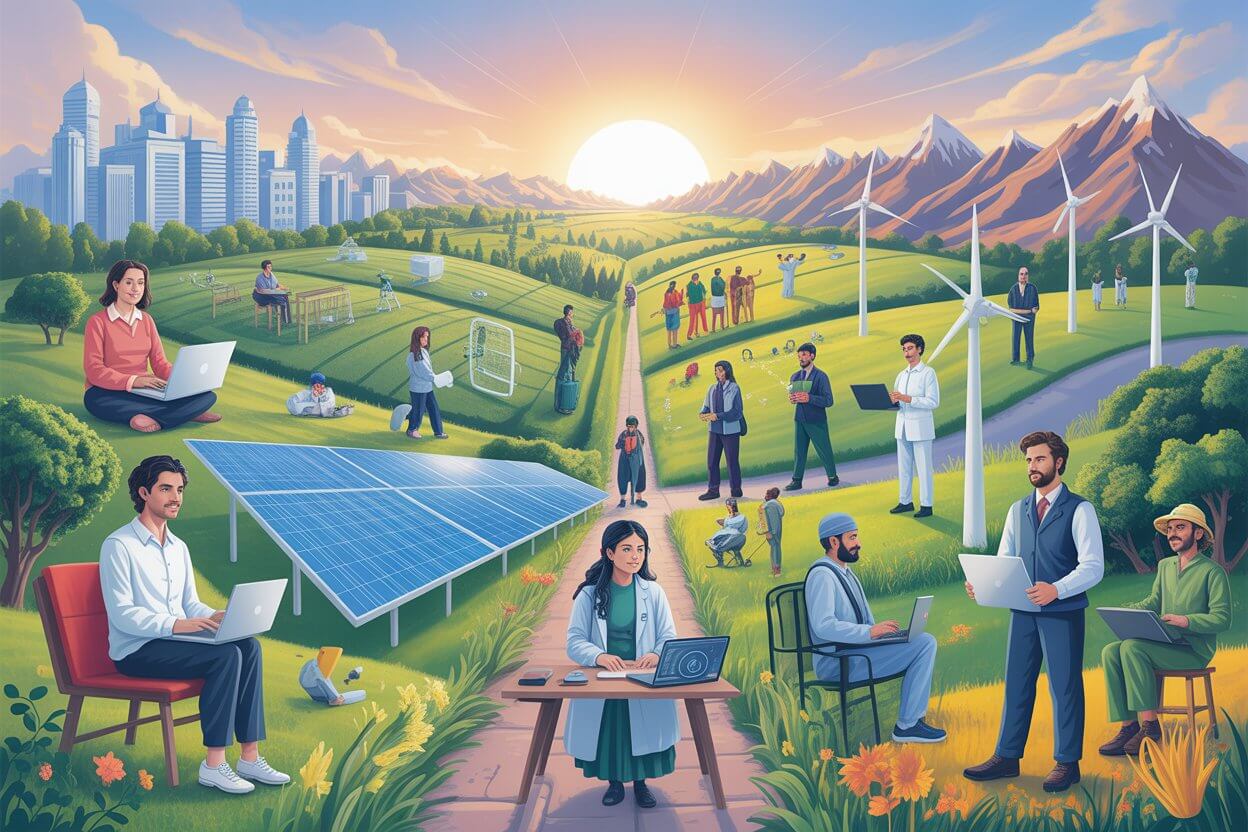
Macro Overview: Where the Future of Pakistan Is Headed
The future of Pakistan is no longer a distant concept—it is being shaped right now by technology, youth energy, economic shifts, and community resilience. While challenges such as economic pressure, climate risk, and governance gaps remain, Pakistan is also witnessing transformational trends that can redefine its trajectory. Understanding these trends helps separate short-term noise from long-term direction and reveals how a Mazboot Pakistan can emerge through smart choices and inclusive growth.
The digital economy is becoming a cornerstone of the future of Pakistan. Freelancing, software exports, AI tools, and remote jobs are positioning Pakistan as a global digital workforce hub.
Data-backed insight: Pakistan consistently ranks among the world’s top freelancing countries, with strong growth in IT exports.
Opportunity: Foreign income inflow, youth employment, global exposure.
Risk: Internet access gaps, inconsistent policy support.
With a majority-young population, entrepreneurship is defining the future of Pakistan. Young founders are launching startups and small businesses in fintech, e-commerce, logistics, and local problem-solving sectors.
Opportunity: Job creation, innovation, reduced dependency on traditional employment.
Risk: Limited funding access and regulatory friction.
-
Renewable Energy Shift
Pakistan’s rapid adoption of solar and wind energy is reshaping its energy future. Households and industries are turning to renewables to cut costs and reduce reliance on imported fuels.
Data-backed insight: Solar installations have surged due to falling panel costs.
Opportunity: Energy security, green jobs, cost stability.
Risk: Grid integration challenges and policy inconsistency.
-
Skills-Based Education
The future of Pakistan’s workforce is shifting from degree-focused to skills-based education. Online learning platforms, vocational training, and global certifications are replacing traditional mindsets.
Opportunity: Global competitiveness, faster employability.
Risk: Quality control and uneven access in rural areas.
-
Healthcare Expansion & Telemedicine
Healthcare is emerging as both a social and economic priority. Telemedicine, digital health platforms, and public-private initiatives are expanding access—especially in remote regions.
Opportunity: Better health outcomes, job creation, medical innovation.
Risk: Infrastructure gaps and affordability concerns.
-
Women’s Economic Participation
One of the most powerful trends shaping the future of Pakistan is the rising participation of women in tech, business, sports, and creative industries.
Opportunity: Inclusive growth, stronger households, broader talent pool.
Risk: Cultural resistance and safety challenges in some regions.
-
Creative & Content Economy
Pakistan’s creative economy—including film, fashion, gaming, design, and digital content—is gaining international attention and reshaping the country’s image.
Opportunity: Soft power, global visibility, export diversification.
Risk: Monetization limits and platform dependency.
-
Agriculture Modernization
Agriculture is evolving through agri-tech, smart irrigation, and value-added exports. These changes are increasing productivity and improving farmer income.
Opportunity: Food security, rural uplift, export growth.
Risk: Climate vulnerability and adoption barriers for small farmers.
-
Community-Led Development
Grassroots NGOs, youth groups, and volunteer networks are solving local problems where systems fall short. This community-driven approach is quietly strengthening a Mazboot Pakistan.
Opportunity: Social resilience, rapid response, trust-building.
Risk: Sustainability without long-term institutional backing.
Balancing Risk and Opportunity
The future of Pakistan will not be shaped by a single policy or sector. It will depend on how effectively the country:
- Aligns education with market needs
- Supports youth and women participation
- Stabilizes economic and energy systems
- Scales successful grassroots models
Progress is visible, but continuity and governance will decide its depth.
Frequently Asked Questions
1. What will be the future of Pakistan in 2030?
By 2030, Pakistan’s future is expected to be shaped by digital innovation, youth-led entrepreneurship, renewable energy adoption, skills-based education, healthcare expansion, and community-driven development. If current trends continue, Pakistan could see stronger economic growth, increased global connectivity, and a more inclusive society, laying the foundation for a Mazboot Pakistan.
2. What is the future plan of Pakistan?
Pakistan’s future plans focus on economic modernization, technology integration, renewable energy expansion, educational reforms, women empowerment, and infrastructure development. Strategic initiatives aim to support youth, startups, healthcare, and agriculture modernization, balancing social welfare with economic growth to create long-term sustainability.
3. What is the future growth of Pakistan?
The future growth of Pakistan is expected to be driven by key sectors such as IT & freelancing, startups, creative industries, agriculture modernization, renewable energy, and healthcare. With continued policy support and youth participation, Pakistan can achieve higher GDP growth, job creation, and global competitiveness over the next decade.
4. What will be the economy of Pakistan in 2050?
By 2050, Pakistan’s economy could transform into a diversified, innovation-driven, and globally integrated economy. Growth sectors like digital services, renewable energy, technology, agriculture, healthcare, and creative industries are expected to dominate. If investments in education, skills, and governance continue, Pakistan could emerge as a Mazboot Pakistan with sustainable economic strength and global recognition.
Conclusion: The Direction of the Future of Pakistan
The future of Pakistan is neither predetermined nor hopeless—it is in motion. Digital work, youth entrepreneurship, renewable energy, skills-based learning, healthcare expansion, creative industries, modern agriculture, and community leadership are defining the next chapter.
If these trends are supported with consistent policy, inclusion, and long-term vision, Pakistan can move from potential to performance—building a resilient, opportunity-driven, and truly Mazboot Pakistan.