
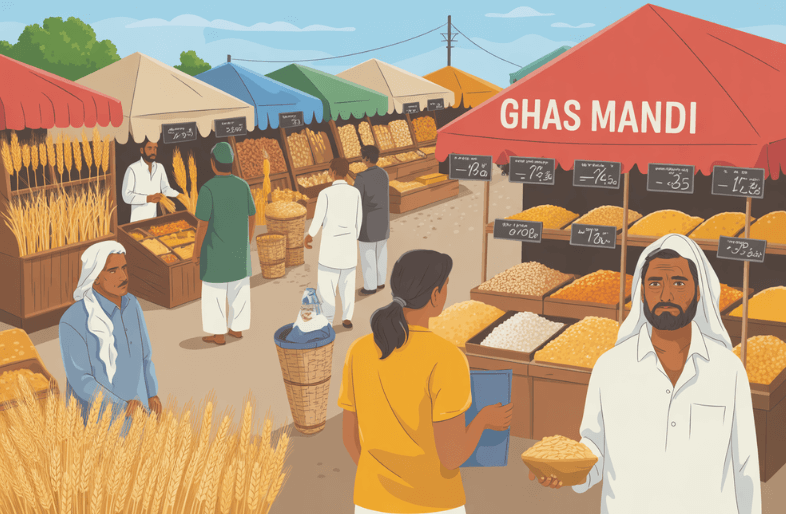
Ghas Mandi Report – A Complete Guide to Daily Crop Prices, Agricultural Markets & Farmer Decisions in Pakistan
Pakistan’s agricultural economy is driven by millions of farmers, traders, processors, and exporters who rely on fair pricing to survive. Among the most important pillars of this system is Ghas Mandi (or Grain Market) a traditional marketplace where commodities such as wheat, rice, maize, sugarcane, barley, cotton, pulses, and oilseeds are bought and sold every day. These markets do not just support trade; they shape livelihoods, rural development, food affordability, and industrial supply chains.
In this ecosystem, Ghas Mandi Reports hold tremendous value. These daily pricing updates act as a transparent tool for understanding fluctuations, seasonal shortages, market competition, and demand–supply trends. For farmers, the report can determine whether their year-long effort brings profit or loss. For consumers, these prices influence household grocery budgets. And for policymakers, mandi data guides subsidy allocation, import/export decisions, and food security planning.
What Is a Ghas Mandi Report?
A Ghas Mandi Report is a market bulletin that provides updated prices for agricultural commodities across Pakistani markets. These updates usually include:
- Daily wholesale prices of grains and pulses
- Retail price ranges in different cities
- Supply and demand trends
- Seasonal estimate and arrival information
- Expected future prices
- Market shocks such as rainfall, floods, or transportation issues
In short, the report acts as a real-time indicator of market health. Farmers check it to see whether it is profitable to sell immediately or wait. Traders compare prices between cities to decide where to transport goods. Food processors depend on it to negotiate procurement rates.
Because Pakistan’s mandis operate locally, a Ghas Mandi Report may vary from district to district. For example, rates in Multan, Rahim Yar Khan, Lahore, and Sukkur often differ due to transportation cost, storage, weather, and regional supply.
Why Ghas Mandi Reports Matter in Pakistan’s Agriculture
-
Price Transparency
Agriculture pricing in South Asia is often influenced by middlemen. Farmers may not get fair compensation because they have no visibility on daily rates. A mandi report eliminates guesswork. When a grower knows that wheat is selling for Rs. 4,000 per maund in Lahore but only Rs. 3,600 in his village, he can negotiate better or transport the grain to a more profitable market.
-
Market Awareness & Trend Tracking
Crop prices are never static. They rise and fall due to:
- rain or drought
- pests and disease
- fertilizer prices
- global commodity trends
- export policies
- Ramadan or Eid demand
A farmer who monitors these trends can identify peak-sale windows. Similarly, buyers—ranging from flour mills to rice exporters—can stock when prices are low.
-
Informed Selling & Profit Optimization
Pakistan has a long history of farmers selling right after harvest, when the market is flooded and rates are lowest. A mandi report empowers them to store crops temporarily and sell later at higher margins. This practice improves income and encourages long-term sustainability.
-
Consumer & Retail Benefits
Households depend on stable pricing for atta, rice, pulses, cooking oil, and animal feed. When mandi prices rise sharply, retail inflation follows. Tracking these reports allows wholesalers and retailers to manage inventory and avoid sudden shortages.
-
Government Policy, Subsidies & Procurement
Provincial food departments and federal ministries monitor grain mandi rates daily. These figures help determine:
- wheat support price
- sugarcane procurement rate
- export restrictions
- import needs
- subsidy eligibility
- public storage policies
Simply put, mandi prices influence national food security.
How Ghas Mandi Reports Are Published
Unlike traditional word-of-mouth updates, modern mandi prices are accessible through multiple channels:
Government & Agriculture Websites
Provincial departments (Punjab, Sindh, KP) publish daily crop price bulletins. These are used by institutional buyers and exporters.
Mobile Applications
Several farming apps provide instant mandi rates, weather alerts, fertilizer prices, pesticide guidance, and digital payment tools. These apps are increasingly popular among young farmers.
Local Newspapers
Urdu business sections often include mandi tables for grains, vegetables, and livestock. In rural Pakistan, this remains a trusted source.
Social Media & WhatsApp Channels
Thousands of farmers receive informal daily updates through trader groups and farmer communities. These channels spread information rapidly, especially during harvest seasons.
Community Market Boards
Many physical Ghas Mandis display daily rates on notice boards, allowing sellers to see market trends before auctioning goods.
Who Benefits Most from Ghas Mandi Reports?
Farmers
- Improve selling price
- Avoid exploitation
- Compare multiple markets
- Negotiate confidently
Traders & Commission Agents
- Track regional arbitrage opportunities
- Decide transport routes
- Manage warehouse inventory
Millers & Industrial Buyers
Rice mills, flour mills, poultry feed factories, and sugar mills depend heavily on reliable mandi data.
Consumers
Ultimately, mandi stability means stable roti, sugar, and rice prices.
Government Institutions
Mandi rates influence procurement targets and taxation.
Challenges in Pakistan’s Mandi System
Despite progress, several issues persist:
- Lack of uniform price recording
- Delayed digital infrastructure in rural zones
- Exploitative middlemen system
- Post-harvest storage losses
- Limited farmer transport capacity
Improving real-time mandi reporting can boost income and reduce food inflation dramatically.
The Future of Ghas Mandi Reports in a Digital Pakistan
Pakistan is witnessing a technological shift. Digital agriculture, mobile payments, drone crop monitoring, and farm analytics are becoming mainstream. Soon, mandi data may be integrated with:
- satellite-based yield forecasts
- AI-driven price prediction
- online commodity trading
- digital warehousing receipts
This transformation could unlock billions for rural Pakistan.
Final Thoughts
A Ghas Mandi Report is more than just a pricing sheet; it is the foundation of Pakistan’s agricultural market. When farmers have access to transparent pricing, they negotiate better, invest confidently, and secure their family income. When consumers understand market forces, they plan household budgets smartly. When policymakers analyze daily data, they stabilize national food supplies.
Strengthening and digitalizing mandi reports will help Pakistan build a fair, profitable, and future-ready agricultural economy, one where farmers are empowered, markets remain transparent, and food reaches every household at a sustainable price.