
Introduction
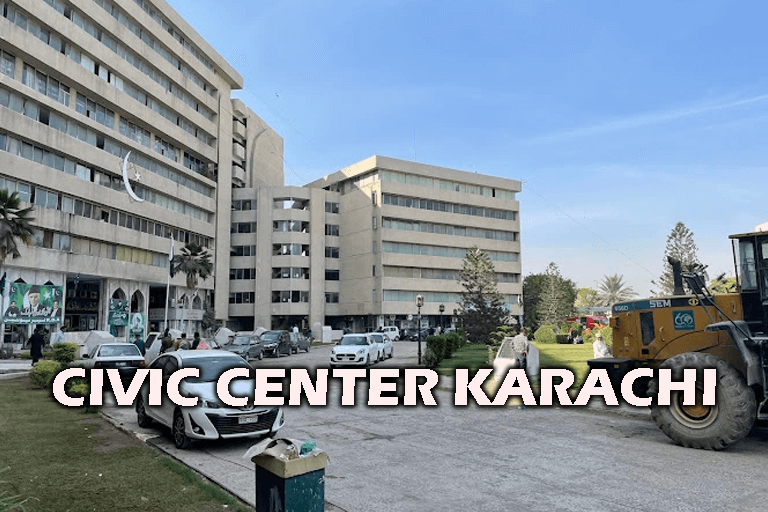
Civic Center Karachi is one of the most important administrative and commercial complexes in the city. It serves as a center for government offices, corporate branches, and various service departments. Known for its accessibility and modern infrastructure, the Civic Center has become a landmark for both official work and business transactions.
Located near Shahrah-e-Faisal, it is easily accessible from all major parts of Karachi and is a hub for corporate offices, consulates, banks, and municipal services.
Location of Civic Center Karachi
Civic Center is situated on:
Shahrah-e-Faisal, near Liaquatabad & Gulshan-e-Iqbal area
Nearby Landmarks
- Aga Khan University Hospital
- Karachi Expo Center
- NIPA Chowrangi
- Korangi Industrial Area
- Airport Road
Its strategic position on Shahrah-e-Faisal makes it highly accessible for people coming from Saddar, Clifton, Korangi, and other city areas.
Facilities & Services at Civic Center
Civic Center Karachi houses a variety of government and commercial offices:
- Government Offices
- Karachi Metropolitan Corporation (KMC)
- Excise & Taxation offices
- Utility bill offices
- Passport services
- Corporate & Business Offices
- Banks and insurance companies
- Real estate offices
- Telecommunication service centers
- Event management companies
- Visitor Amenities
- Parking space
- Food stalls and cafes
- Waiting areas
- Security arrangements
- Public restrooms
Transport & Accessibility
Civic Center is well-connected through:
- Buses & public transport: Routes from Saddar, Gulshan-e-Iqbal, and Shahrah-e-Faisal
- Ride-hailing services: Uber, Careem, and local taxis
- Proximity to Karachi Airport: About 15–20 minutes by car
- Parking facilities: Available for visitors
Nearby Markets & Attractions
Visitors to Civic Center can also explore nearby areas:
- Dolmen Mall Clifton
- Karachi Expo Center
- Frere Hall
- Saddar Market
- Gulshan-e-Iqbal commercial areas
These locations provide dining, shopping, and leisure options for visitors.
Why Civic Center Karachi Is Important
Civic Center Karachi is vital for:
- Administrative work – handling government and municipal services
- Corporate offices – banking, insurance, and telecom hubs
- Accessibility – easy access from multiple city regions
- Centralized services – combining multiple official and business services in one location
For residents and businesses, it reduces the need to travel across the city for official work.
FAQs About Civic Center Karachi
- Where is Civic Center Karachi located?
It is on Shahrah-e-Faisal, close to Liaquatabad, Gulshan-e-Iqbal, and Korangi.
- What offices are located in Civic Center Karachi?
Civic Center hosts government offices, corporate branches, banks, insurance offices, passport centers, and utility services.
- Is there parking at Civic Center?
Yes, the complex has designated parking areas for visitors and employees.
- How can I reach Civic Center Karachi?
You can reach via public buses, local taxis, ride-hailing apps, or personal vehicles.
- Are there food options near Civic Center?
Yes, several cafes, restaurants, and food stalls are available within walking distance.
Conclusion
Civic Center Karachi stands as a cornerstone of administrative efficiency and urban development in Pakistan’s largest city. Strategically located on Shahrah-e-Faisal, it serves as a central hub where government offices, corporate branches, utility services, and commercial establishments converge, making it a vital destination for both residents and businesses. The accessibility of Civic-Center from key areas like Saddar, Clifton, Gulshan-e-Iqbal, and Korangi ensures that citizens can efficiently handle official work, banking, insurance, and other essential services without the need to navigate the city’s busy roads multiple times.
Beyond its administrative importance, Civic-Center Karachi has become a landmark that reflects the city’s modern infrastructure and urban planning. With visitor amenities such as parking, security, food stalls, and well-organized spaces, it provides a comfortable and safe environment for people from all walks of life. Its proximity to commercial hubs, shopping malls, and cultural landmarks, including Dolmen Mall Clifton, Karachi Expo Center, and Frere Hall, adds to its significance, allowing visitors to combine business or official tasks with leisure and shopping.
The integration of government services, corporate offices, and public facilities under one roof highlights the efficiency and forward-thinking approach of Karachi’s urban management. Civic-Center Karachi not only reduces logistical burdens for citizens but also contributes to the city’s economic growth by facilitating smooth business operations and supporting commercial activity. It embodies a model of centralized service provision, showcasing how modern infrastructure can enhance productivity and convenience.
By maintaining such organized, accessible, and functional public spaces, Pakistan moves a step closer to a Mazboot Pakistan, where civic infrastructure, governance, and public services work hand-in-hand to support the country’s development, prosperity, and social well-being. Civic-Center Karachi exemplifies how well-planned urban hubs can strengthen the nation, improve daily life for citizens, and inspire confidence in Pakistan’s administrative capabilities, making it a key pillar in building a stronger, more efficient, and progressive country.