
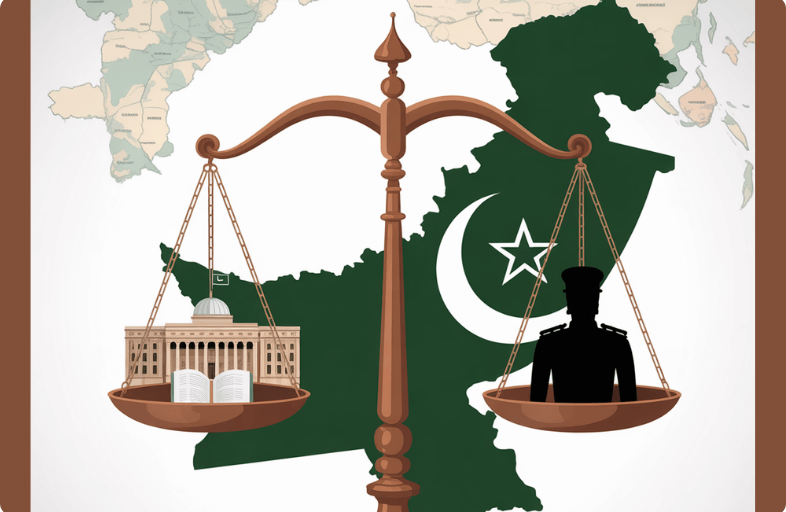
Civil-Military Relation Debates have always remained one of the most discussed, sensitive, and impactful topics in Pakistan’s political, social, and institutional landscape. The debate revolves around how power is shared, how decisions are made, and how the military and civilian leadership cooperate—or clash—on national affairs.
In 2025, conversations on civil-military relations continue to shape policies, political stability, the democratic process, and the overall direction of the state. This detailed article explores the history, importance, challenges, and current debates surrounding civil-military relations in Pakistan.
What Are Civil-Military Relation Debates?
Civil–military relations refer to the interaction between a country’s civilian government and its military institutions. It defines how much influence the military holds, how decisions are made, and how both institutions maintain a balance of power to ensure national stability.
Healthy civil–military relations require:
- Civilian supremacy under the constitution
- Military professionalism
- Transparency in national security decision-making
- Respect for democratic processes
- Coordinated policies for internal and external security
History of Civil–Military Relations in Pakistan
Pakistan’s history is shaped by multiple military interventions:
- 1958 coup (Ayub Khan)
- 1977 coup (Zia-ul-Haq)
- 1999 coup (Pervez Musharraf)
These interventions created long-lasting structural imbalances between civilian and military authority. However, after 2008, Pakistan experienced a return to continuous democratic transitions, though debates on influence and decision-making still persist.
Current Civil–Military Relations Debates in Pakistan
Role of the Military in Politics
A key debate revolves around whether the military should influence:
- Elections
- Government formation
- Policy decisions
- Accountability processes
Supporters of stronger military oversight argue it stabilizes Pakistan. Critics, however, claim it weakens democracy.
National Security vs. Democratic Autonomy
Many argue that civilian governments lack technical expertise on security and foreign policy.
Others believe civilian supremacy is essential for a democratic system to function properly.
Governance, Corruption, and Reforms
Some people argue that the military’s involvement is needed to ensure accountability and efficiency.
Others say real progress comes only through democratic institutions, transparency, and civilian-led reform.
Media Freedom and Public Narrative
Media plays a major role in shaping public opinion. Debates often focus on:
- Media censorship
- Narratives against civilian leaders
- Criticism of military influence
Social media has intensified these debates like never before.
Civilian Control Over Policy
Key areas include:
- Foreign policy
- Defense budget
- Counterterrorism strategies
- Intelligence agencies
Balancing national security with democratic decision-making remains a major challenge.
Why Civil-Military Relation Debates Matter for Pakistan
Strong civil–military coordination impacts:
- Political stability
- Economic growth
- Relations with global powers
- Internal security
- Institutional strength
Pakistan’s progress depends on building trust, clarity of roles, and rule of law between both institutions.
Path Forward: How Pakistan Can Improve Civil-Military Relation Debates Balance
Experts recommend:
- Strengthening parliament and civilian institutions
- Increasing transparency in national security policymaking
- Professionalizing civilian bureaucracy
- Respecting constitutional boundaries
- Encouraging dialogue between institutions
- Promoting media freedom and informed public debate
The future depends on cooperation, not confrontation.
Conclusion
The ongoing debate on civil–military relations in Pakistan highlights a deeper national struggle to achieve lasting political stability, democratic maturity, and long-term security. Since independence, the balance of power between civilian institutions and the military has remained a defining factor in shaping the country’s political direction. While the armed forces continue to be one of Pakistan’s most organized, disciplined, and influential institutions—playing a critical role in national defense and security—the concentration of power in any single institution can hinder democratic growth if left unchecked.
For Pakistan to move toward sustainable prosperity, a clear balance of authority is essential. Civilian supremacy, grounded in constitutional principles and supported by strong governance structures, must be reinforced to ensure transparency, accountability, and public trust. At the same time, meaningful collaboration between civilian leadership and the military is necessary to address complex challenges such as internal security, economic stability, and regional dynamics.
Rather than competition, mutual respect and defined roles should guide civil–military interactions. Strengthening democratic institutions, empowering elected representatives, and promoting inclusive decision-making can help reduce political uncertainty and institutional friction. Ultimately, a harmonious and constitutional relationship between civilian and military leadership is vital for guiding Pakistan toward a stable, democratic, and secure future that reflects the aspirations of its people.