
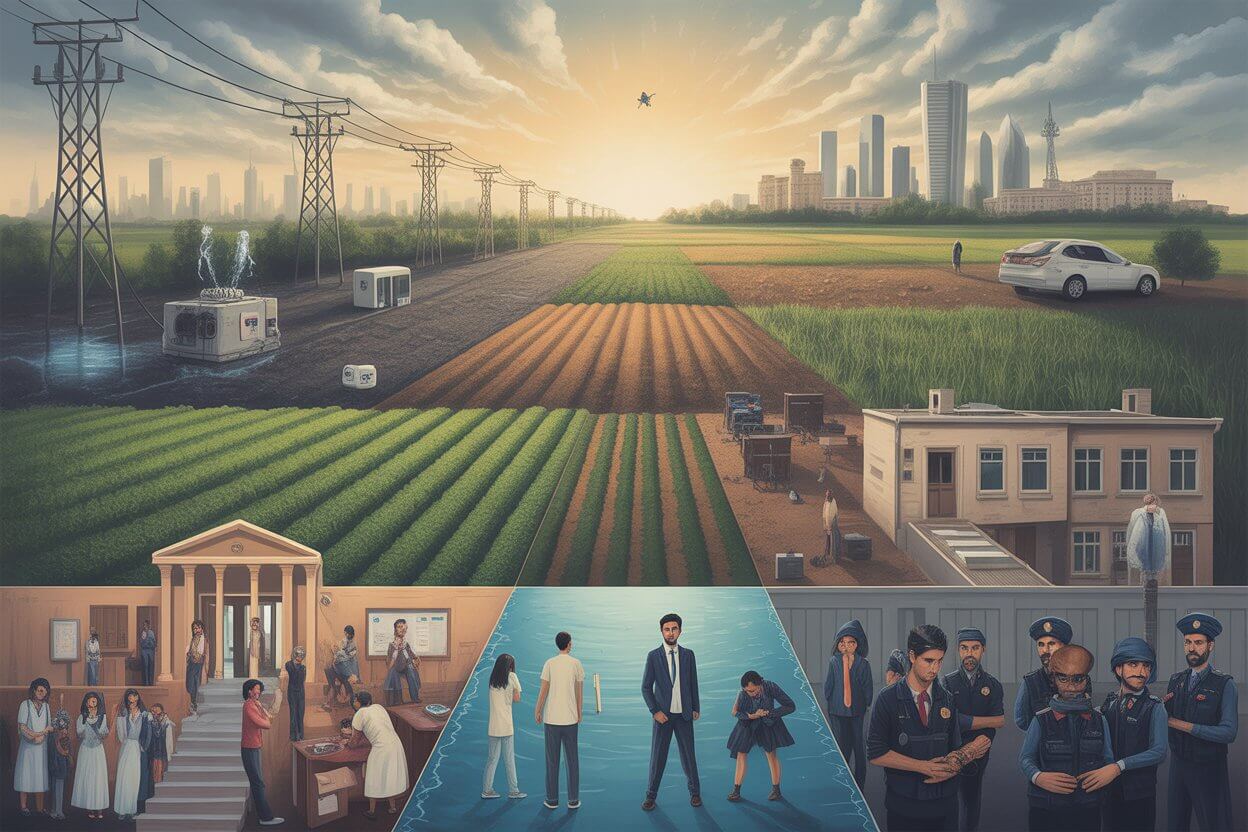
Structural Challenges Shaping the Future of Pakistan
While Pakistan has immense potential for growth and transformation, several structural challenges could limit progress if not addressed. From energy shortages to environmental stress, these issues threaten to slow economic development, reduce global competitiveness, and hinder the creation of a Mazboot Pakistan.
-
Energy Shortages & Infrastructure Gaps
Frequent load-shedding and outdated energy infrastructure continue to disrupt industrial production and business operations.
Impact:
- Hinders industrial growth
- Reduces investor confidence
- Limits reliable power for startups and technology hubs
Addressing energy infrastructure is critical to ensure consistent economic growth.
-
Political Instability & Governance Issues
Frequent policy changes, weak institutions, and political uncertainty can slow reforms and development initiatives.
Impact:
- Delays in economic and social projects
- Difficulty in attracting long-term investment
- Reduced public trust in institutions
Strengthening governance and ensuring policy continuity is essential for a stable future.
-
Education & Skill Gaps
Low literacy rates, outdated curricula, and insufficient vocational training leave many young Pakistanis unprepared for global markets.
Impact:
- Limits youth employability
- Reduces competitiveness in IT, digital economy, and skilled sectors
- Slows innovation and entrepreneurship
Investing in skills-based education and modern learning is vital for a future-ready workforce.
-
Water Scarcity & Environmental Stress
Overuse of water resources, climate change, and poor waste management threaten both agriculture and urban living conditions.
Impact:
- Reduces agricultural productivity
- Affects health and sanitation
- Poses long-term sustainability risks
Sustainable water and environmental management strategies are crucial to safeguard Pakistan’s future.
-
Economic Inequality & Inflation
High inflation and wealth disparity limit opportunities for lower-income populations, slowing overall economic progress.
Impact:
- Reduces consumer purchasing power
- Increases social tension
- Hinders inclusive growth
Addressing inequality and inflation is key to creating a Mazboot Pakistan where all citizens can thrive.
-
Healthcare Accessibility & Quality
Limited medical facilities in rural areas and uneven distribution of healthcare resources can hinder human capital development.
Impact:
- Poor health outcomes limit workforce productivity
- Increases vulnerability during pandemics or crises
- Reduces quality of life for underserved communities
Expanding healthcare infrastructure and telemedicine initiatives is essential for sustainable development.
-
Terrorism & Security Concerns
Although security has improved in recent years, remaining threats can discourage tourism, foreign investment, and international partnerships.
Impact:
- Hinders economic growth in sensitive regions
- Reduces global investor confidence
- Affects social stability and citizen safety
Maintaining security is crucial to ensure a stable environment for growth and innovation.
Youth and Economic Implications
The youth population of Pakistan is a potential game-changer, but these challenges—especially in education, skills, and economic opportunities—directly affect their ability to contribute to national growth. Addressing structural, governance, and social issues will allow young Pakistanis to thrive, driving the country toward a Mazboot Pakistan despite these obstacles.
Frequently Asked Questions: Future of Pakistan Challenges
1. What are the main challenges facing Pakistan’s future?
The main challenges include energy shortages, political instability, education and skill gaps, water scarcity, economic inequality, healthcare accessibility, and security concerns. These structural and governance issues could limit economic growth and social development.
2. How do energy shortages affect Pakistan’s growth?
Frequent load-shedding and outdated infrastructure disrupt industry, reduce investor confidence, and limit the growth of startups and technology hubs.
3. Why is political stability important for Pakistan’s future?
Political instability and weak governance can delay reforms, reduce foreign investment, and slow infrastructure and social development projects.
4. What role does education play in shaping Pakistan’s future?
Education and skills development are crucial for preparing youth to compete globally. Low literacy and outdated curricula can limit employment opportunities and economic innovation.
5. How does water scarcity impact Pakistan?
Overuse of water, climate change, and poor waste management threaten agriculture, health, and urban living, potentially slowing economic and social progress.
6. What are the economic challenges for Pakistan’s youth?
High inflation, wealth disparity, and limited job opportunities make it difficult for young people to thrive, affecting long-term economic stability.
7. How do healthcare issues affect Pakistan’s development?
Limited healthcare access in rural areas and uneven distribution of medical facilities can reduce workforce productivity and hinder human capital development.
8. Is security still a concern in Pakistan?
Yes. While security has improved, terrorism and regional conflicts can discourage tourism, foreign investment, and global partnerships.
9. Can Pakistan overcome these challenges?
Yes, with policy reforms, infrastructure investment, skill development, healthcare expansion, and community engagement, Pakistan can build a Mazboot Pakistan despite these challenges.
Conclusion: Preparing for a Resilient Future
Pakistan’s future is bright but fragile. Structural weaknesses, policy gaps, environmental stress, and social inequality can derail progress if not addressed proactively. By focusing on energy reform, governance stability, skill development, healthcare access, and security, Pakistan can overcome these challenges and build a resilient, opportunity-driven, and Mazboot Pakistan for the decades ahead.