
Introduction:
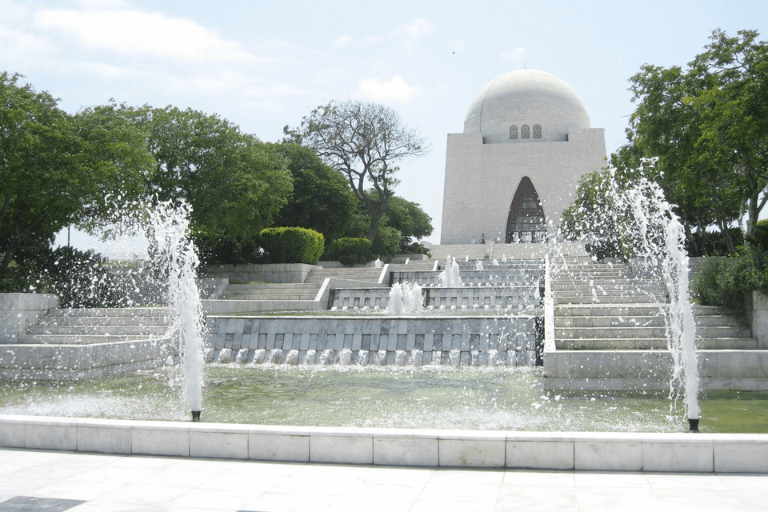
Mazar-e-Quaid, also known as the Quaid-e-Azam Mausoleum, is the final resting place of Muhammad Ali Jinnah, the founder of Pakistan. Situated in the heart of Karachi, it is one of the country’s most visited landmarks and a symbol of Pakistan’s independence, unity, and pride.
History of Mazar-e-Quaid:
- Proposed soon after Jinnah’s death in 1948, construction began in 1960 and completed in 1970.
- Designed by architect Yousuf Khwaja, the mausoleum reflects a blend of modern and traditional architectural elements.
- Built with white marble, the monument signifies purity and peace.
Architecture and Design:
- The mausoleum stands on a raised platform, surrounded by lush green gardens.
- Its octagonal structure represents both Islamic and modern architectural influences.
- The tomb is adorned with inscriptions from the Holy Quran, emphasizing Jinnah’s vision and values.
Visiting Mazar-e-Quaid:
- Open to visitors daily, with guided tours available.
- Nearby attractions include the Karachi Arts Council, Frere Hall, and scenic gardens.
- The site hosts national ceremonies on Independence Day (August 14) and Jinnah’s birthday (December 25).
Significance:
- Serves as a reminder of Pakistan’s struggle for independence.
- A symbol of unity and patriotism for Pakistanis.
- Educates visitors about the life and achievements of Quaid-e-Azam.
Frequently Asked Questions:
Q1: Who else is buried in Mazar-e-Quaid?
A1: Apart from Muhammad Ali Jinnah, Mazar-e-Quaid also houses the graves of some of his close associates and prominent leaders, including Fatima Jinnah, Jinnah’s sister and a key figure in Pakistan’s independence movement.
Q2: Where is Muhammad Ali Jinnah’s tomb?
A2: Muhammad Ali Jinnah’s tomb is located at Mazar-e-Quaid in Karachi, Sindh, Pakistan. It is the country’s national monument and a major tourist attraction.
Q3: Why is Mazar-e-Quaid closed?
A3: Mazar-e-Quaid may be temporarily closed for national ceremonies, security reasons, maintenance work, or special events. Visitors are advised to check official announcements before planning their visit.
Q4: Who is the founder of Pakistan in Urdu?
A4: The founder of Pakistan is محمد علی جناح (Muhammad Ali Jinnah) in Urdu, often referred to as Quaid-e-Azam (قائداعظم).