
Introduction
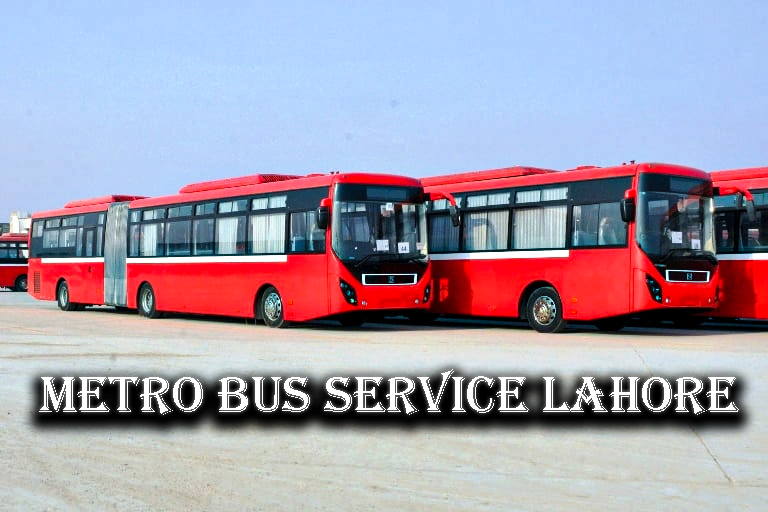
The metro bus service Lahore is one of Pakistan’s most significant urban transport projects, designed to provide fast, affordable, and reliable public transportation to millions of daily commuters. Launched to reduce traffic congestion and improve mobility, the metro bus service Lahore has become a lifeline for students, office workers, and low-income commuters across the city.
With dedicated bus lanes, modern stations, and subsidized fares, the metro bus service Lahore represents a major step toward sustainable urban development. This article explores its history, routes, benefits, challenges, and future potential in strengthening Pakistan’s public transport system.
Background of Metro Bus Service Lahore
The metro bus service Lahore was inaugurated in 2013 as Pakistan’s first Bus Rapid Transit (BRT) system. The project was developed to address Lahore’s rapidly growing population and increasing traffic congestion.
Before the metro bus service Lahore, public transport options were limited, overcrowded, and unreliable. The introduction of a structured BRT system brought international-standard urban transport to Pakistan’s second-largest city.
Routes and Coverage
The metro bus service Lahore operates on a dedicated corridor, ensuring smooth and uninterrupted travel.
Key Route Details:
- Total length: Approximately 27 kilometers
- Major areas covered:
- Shahdara
- Mall Road
- Gajjumata
- Kalma Chowk
- Qaddafi Stadium vicinity
The metro bus service Lahore connects residential areas with commercial, educational, and business hubs, making daily commuting faster and more predictable.
Affordable Fare Structure
One of the biggest advantages of the metro bus service Lahore is its affordability.
- Subsidized fares for the general public
- Affordable for students and low-income workers
- Smart card system for easy access
Compared to private transport and fuel costs, the metro bus service Lahore offers a cost-effective solution for daily travel.
Modern Infrastructure and Facilities
The metro bus service Lahore features modern infrastructure designed for efficiency and passenger comfort:
- Elevated and ground-level stations
- Automatic ticketing machines
- Security cameras
- Digital display boards
- Dedicated bus lanes to avoid traffic delays
These features have improved the overall public transport experience in Lahore.
Environmental and Traffic Benefits
The metro bus service Lahore plays a vital role in reducing environmental pollution and traffic congestion.
Key benefits include:
- Reduced number of private vehicles on roads
- Lower fuel consumption
- Decreased air and noise pollution
- Improved traffic flow on major roads
By encouraging public transport usage, the metro bus service Lahore supports a cleaner and more sustainable urban environment.
Impact on Daily Life
Millions of people rely on the metro bus service Lahore every day for:
- Commuting to work
- Traveling to universities and colleges
- Accessing healthcare facilities
- Reducing travel time and costs
For many residents, the metro bus service Lahore has transformed daily routines by making travel faster, safer, and more reliable.
Employment and Economic Impact
The metro bus service Lahore has also contributed to economic growth by:
- Creating jobs for drivers, operators, and maintenance staff
- Supporting small businesses around metro stations
- Increasing property value near the corridor
Improved transport connectivity boosts productivity and supports urban economic activity.
Challenges Faced by Metro Bus Service Lahore
Despite its success, the metro bus service Lahore faces several challenges:
- High operational and maintenance costs
- Government subsidies required to keep fares low
- Peak-hour overcrowding
- Expansion limitations due to urban density
Addressing these challenges is essential for long-term sustainability.
Comparison with Other Transport Systems
Compared to traditional buses and wagons, the metro bus service Lahore offers:
- Faster travel times
- Higher reliability
- Better safety standards
- Greater comfort
It has also paved the way for similar projects like the Orange Line Metro Train and other BRT systems across Pakistan.
Future Expansion and Improvements
Plans for improving the metro bus service Lahore include:
- Better integration with other transport systems
- Digital payment enhancements
- Improved station accessibility
- Increased fleet size during peak hours
Such improvements can further strengthen Lahore’s public transport network.
Conclusion
The metro bus service Lahore stands as a landmark achievement in Pakistan’s urban development journey. By offering affordable, efficient, and environmentally friendly transport, it has improved the quality of life for millions of citizens.
While challenges remain, continued investment and smart planning can ensure the long-term success of the metro bus service Lahore. Strengthening public transport systems like this is crucial for sustainable cities and economic progress—an essential step toward a Mazboot Pakistan.
Frequently Asked Questions – Metro Bus Service Lahore
What is the metro bus service Lahore?
The metro bus service Lahore is a Bus Rapid Transit (BRT) system providing fast and affordable public transport across Lahore.
When was the metro bus service Lahore launched?
It was launched in 2013.
What areas does the metro bus service Lahore cover?
It runs from Shahdara to Gajjumata, covering major commercial and residential areas.
Is the metro bus service Lahore affordable?
Yes, it is heavily subsidized to remain affordable for daily commuters.
How has the metro bus service Lahore benefited the city?
It has reduced traffic congestion, lowered pollution, and improved commuting efficiency.