
Qawwali: Pakistan’s Musical Heritage
Qawwali, a form of Sufi devotional music, has been an integral part of Pakistan’s cultural landscape for centuries. Its origins can be traced back to the 13th century, deeply rooted in the teachings of Sufism, which emphasizes love, devotion, and the mystical connection between the divine and humanity. In Pakistan, Qawwali transcends mere entertainment; it serves as a spiritual experience, uniting people across various backgrounds. This blog delves into the rich history, cultural significance, and contemporary adaptations of Qawwali, highlighting its enduring appeal in the modern musical landscape.
Historical Roots of Qawwali
The genesis of Qawwali is closely linked to the spiritual teachings of Sufi saints like Amir Khusro, who is often credited with its development in the Indian subcontinent. Khusro, a 13th-century poet and musician, blended Persian, Arabic, and Indian musical traditions, laying the groundwork for Qawwali’s distinct sound. Traditionally performed in shrines and during religious gatherings, Qawwali was designed to evoke spiritual ecstasy, allowing listeners to connect with the divine.
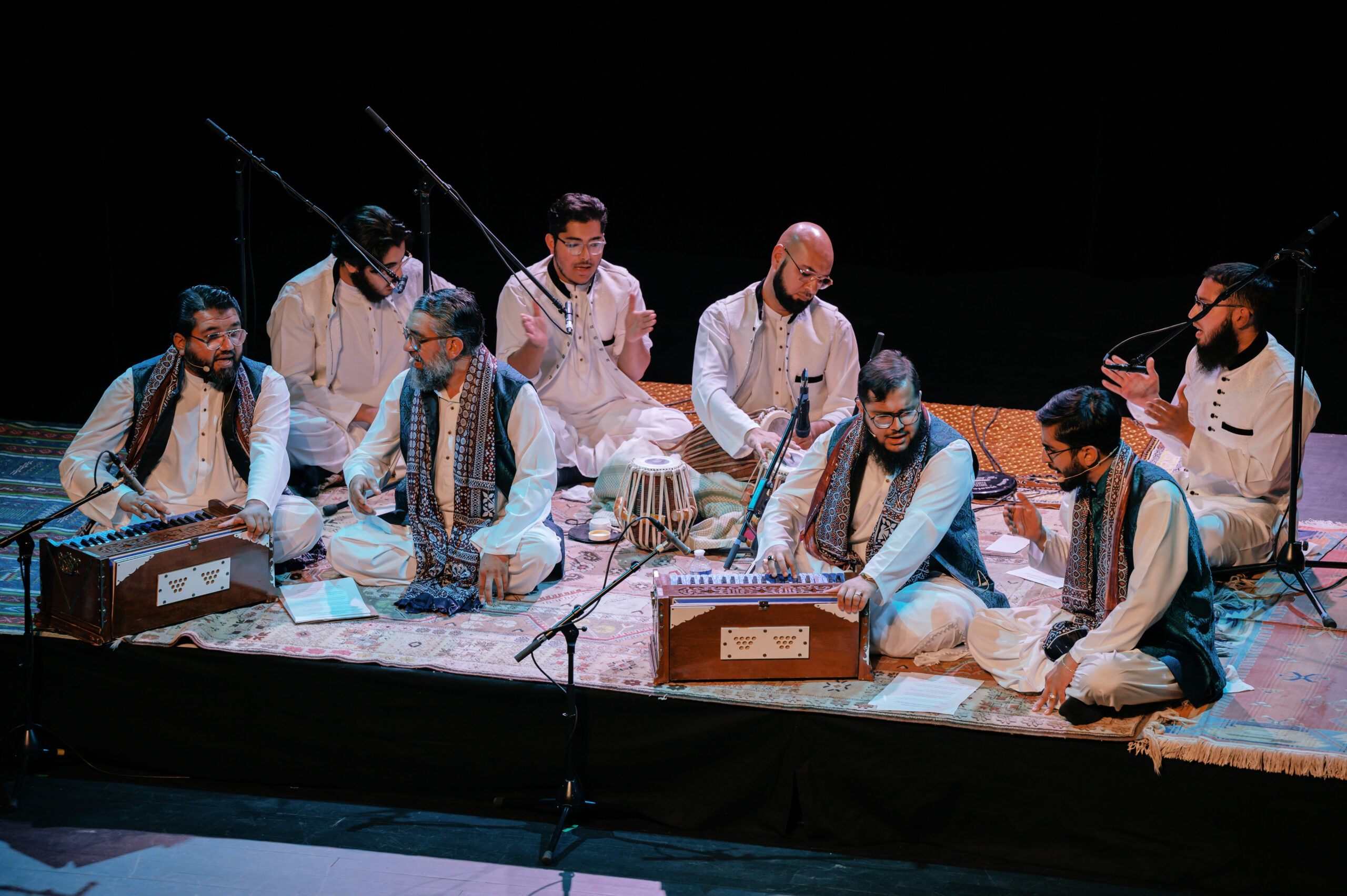
Qawwali’s structure typically involves a lead vocalist, accompanied by a chorus, harmonium, and tabla. The music features repetitive refrains and improvisational elements, allowing for emotional expression and a sense of communal participation. This format invites the audience to join in, making the experience both personal and collective.
Cultural Significance
In Pakistan, Qawwali is more than just a musical genre; it is a cultural phenomenon that embodies the spirit of Sufism. It serves as a vehicle for conveying messages of love, tolerance, and unity, resonating deeply with the diverse population of the country. The performances often take place at Sufi shrines, especially during annual festivals that attract thousands of devotees. These gatherings are not only musical events but also spiritual pilgrimages, reinforcing the connection between the performers, the audience, and the divine.
The lyrics of Qawwali often draw from the poetry of legendary Sufi poets such as Rumi, Bulleh Shah, and Faiz Ahmed Faiz. Their verses explore themes of love, longing, and the quest for truth, making the music accessible and relatable to a wide audience. This lyrical depth, combined with the powerful vocal delivery, creates an emotional resonance that lingers long after the performance has ended.
Contemporary Adaptations
While Qawwali has deep traditional roots, contemporary artists are breathing new life into the genre, blending it with various musical styles. This fusion has attracted younger audiences and expanded the reach of Qawwali beyond its traditional confines. Notable artists like Rahat Fateh Ali Khan and Ali Zafar have incorporated Qawwali elements into pop music, creating a bridge between the past and the present.
Rahat Fateh Ali Khan, the nephew of the legendary Nusrat Fateh Ali Khan, has played a pivotal role in popularizing Qawwali on the global stage. His collaborations with international artists and appearances in films have introduced Qawwali to new audiences, showcasing its universal appeal. Songs like “Tumhein Dillagi” and “Aj Rang Hai” exemplify how traditional Qawwali can be reimagined while retaining its core essence.
Moreover, the rise of social media has allowed emerging Qawwali artists to gain visibility and connect with fans worldwide. Platforms like YouTube and Instagram enable performers to share their music with a global audience, fostering a sense of community among fans of Qawwali across borders.
Challenges and Preservation
Despite its popularity, Qawwali faces challenges in preserving its traditional essence. The commercialization of music, coupled with changing tastes, can sometimes overshadow the spiritual significance of the genre. As artists experiment with new styles and collaborations, it becomes crucial to strike a balance between innovation and tradition.
Efforts are being made to preserve the authenticity of Qawwali through educational initiatives and workshops. Organizations dedicated to Sufi music are working to ensure that younger generations understand the historical and spiritual significance of Qawwali, encouraging them to explore its roots while embracing modern interpretations.
Conclusion – Qawwali: Pakistan’s Musical Heritage
Qawwali: Pakistan’s Musical Heritage stands as a shining example of the nation’s rich cultural and musical legacy. By embracing Qawwali: Pakistan’s Musical Heritage, we celebrate a tradition that reflects Pakistan’s diverse society, spiritual depth, and artistic brilliance. The enduring power of Qawwali: Pakistan’s Musical Heritage lies in its ability to evolve with contemporary influences while maintaining the soul of Sufi poetry and devotional melodies, ensuring that it remains a vibrant and relevant art form.
Through Qawwali: Pakistan’s Musical Heritage, contemporary artists carry forward the legacy of Sufi saints and poets, inspiring listeners and preserving the spiritual essence of the genre. The journey of Qawwali: Pakistan’s Musical Heritage is one of resilience, passion, and cultural pride, making it a crucial part of Pakistan’s identity. By promoting and honoring Qawwali: Pakistan’s Musical Heritage, we contribute to the growth of creative expression, cultural understanding, and national pride, ultimately fostering a Mazboot Pakistan.
In essence, Qawwali: Pakistan’s Musical Heritage is more than music—it is a celebration of love, unity, and spirituality that connects people across generations. Preserving and evolving this tradition strengthens Pakistan’s cultural footprint and ensures that the soul of Qawwali continues to inspire, uplift, and resonate worldwide, forming a key part of a Mazboot Pakistan where heritage and innovation thrive together.