
Introduction
Rawalpindi, often affectionately called “Pindi,” is one of Pakistan’s most historically rich and strategically significant cities. Located in the province of Punjab and immediately adjacent to the capital city, Islamabad, Rawalpindi serves as a vital hub for administration, commerce, culture, and defense. Its unique position as a bridge between northern Pakistan and the country’s political center has made it a focal point for trade, governance, and strategic planning throughout history.
The city is a fascinating blend of colonial-era architecture, military establishments, traditional bazaars, and modern urban developments. Its bustling markets, such as Saddar Bazaar and Raja Bazaar, reflect the city’s commercial vibrancy, while contemporary residential areas like Bahria Town and DHA showcase its rapid urban growth. Rawalpindi’s cultural fabric is equally rich, with diverse communities, local cuisine, and vibrant traditions adding to its charm.
Rawalpindi’s proximity to Islamabad enhances its strategic importance, especially in areas such as national defense, public administration, and policymaking. At the same time, its transportation network, including highways and rail links, makes it a key gateway to northern Pakistan, connecting travelers and goods to hill stations like Murree, Nathia Gali, and Ayubia. Economically, the city supports a variety of industries, from retail and small businesses to large-scale commerce, playing a crucial role in regional development.
This article provides a comprehensive exploration of Rawalpindi, covering its historical evolution, cultural significance, economic role, infrastructure, and future potential. By examining these aspects, readers can understand why Rawalpindi remains a central player in Pakistan’s growth and development, symbolizing both its heritage and its modern aspirations.
Historical Background of Rawalpindi
Rawalpindi is a city steeped in ancient history and rich cultural heritage, with roots that trace back thousands of years. Archaeological studies suggest that the area was part of the ancient Gandhara civilization, known for its art, architecture, and early urban settlements. This early historical significance laid the foundation for Rawalpindi’s development as a thriving urban center over the centuries.
Throughout history, Rawalpindi has witnessed multiple political and cultural transformations, each leaving a distinct mark on the city:
-
Ancient Gandhara Settlement: Early inhabitants contributed to the region’s cultural and religious landscape, with evidence of Buddhist influence and early trade networks connecting it to neighboring civilizations.
-
Sikh Rule under Maharaja Ranjit Singh: During the 18th and early 19th centuries, Rawalpindi came under Sikh governance, gaining strategic and administrative importance in the region.
-
British Colonial Cantonment: The British recognized Rawalpindi’s strategic value and developed it as a military cantonment, establishing structured layouts, roads, and administrative buildings. This era also saw the introduction of modern infrastructure, which continues to influence the city’s planning today.
-
Post-Independence Military Headquarters: After Pakistan’s independence in 1947, Rawalpindi became the headquarters of the Pakistan Army (GHQ), further cementing its status as a strategic and administrative hub.
The city’s cantonment areas, with their organized streets, parks, and institutional buildings, remain a visible legacy of the British-era planning, blending historical architecture with modern urban needs. Today, Rawalpindi is not only a living testament to its diverse historical phases but also a vibrant, modern city that continues to grow while honoring its rich past.
Rawalpindi’s Strategic and Military Importance
Rawalpindi holds unparalleled strategic importance in Pakistan, primarily because it is home to the General Headquarters (GHQ) of the Pakistan Army, making the city the country’s military nerve center. This central role in national defense positions Rawalpindi as a critical hub for strategic planning, security operations, and military administration, not only for Punjab but for the entire nation.
The city’s cantonment areas, known for their organization, planning, and discipline, serve as models of urban management. These zones not only provide high levels of security and operational efficiency but also contribute significantly to the local economy through employment opportunities, infrastructure projects, and community development initiatives. The presence of military institutions has spurred improvements in roads, utilities, healthcare, and education, shaping the overall growth and modernization of Rawalpindi over decades.
Rawalpindi’s military prominence has also influenced its cultural and social landscape, fostering a sense of discipline, civic responsibility, and strategic awareness among its residents. From a historical and contemporary perspective, the city’s role as Pakistan’s military hub has been instrumental in maintaining national security, supporting defense operations, and strengthening the country’s resilience.
In essence, Rawalpindi is not just a city; it is a strategic heart of Pakistan, where military strength, organized urban planning, and national defense intersect, solidifying its identity as a cornerstone of a Mazboot Pakistan.
Geography and Urban Structure
Rawalpindi is strategically situated on the Pothohar Plateau, giving it a unique geographic and topographic identity. This location provides the city with a moderate climate, which is comparatively cooler than southern urban centers, making it favorable for both residential living and commercial activities. Its proximity to Islamabad, the national capital, has created a twin-city dynamic, where both cities share infrastructure, resources, and economic opportunities, while complementing each other’s growth. This relationship enhances connectivity, access to services, and overall urban development.
The urban structure of Rawalpindi reflects a blend of historical planning and modern development. Traditional markets, residential colonies, and commercial hubs coexist with newly developed housing societies and planned townships, creating a dynamic and diverse cityscape. The city’s major areas include:
-
Saddar: The commercial heart of Rawalpindi, home to bustling markets, government offices, and retail centers.
-
Raja Bazaar: Famous for shopping, traditional goods, and vibrant street life, it reflects the city’s cultural and economic vitality.
-
Chaklala: Known for its cantonment area, organized layout, and military significance, contributing to infrastructure and security.
-
Satellite Town: A well-planned residential area with schools, parks, and community services, popular among families.
-
Bahria Town: A modern, gated housing society with contemporary amenities, reflecting the city’s rapid urban expansion and modernization.
Overall, Rawalpindi’s geography and urban structure combine natural advantages, historical significance, and modern planning, making it both a livable city and a strategic economic and administrative hub.
Economy and Commercial Life
The economy of Rawalpindi is diverse and dynamic. It thrives on trade, services, real estate, and small-scale industries.
Economic Highlights
- Raja Bazaar as a major wholesale market
- Retail hubs in Saddar and Commercial Market
- Real estate growth in housing societies
- Employment through defense and services
Rawalpindi acts as a commercial backbone for the northern Punjab region.
Transportation and Connectivity
Rawalpindi is one of Pakistan’s most connected cities.
Key Transport Features
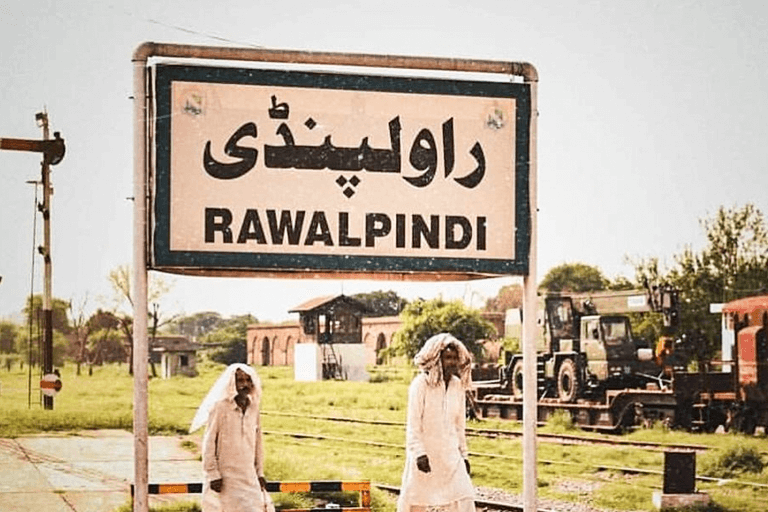
- Rawalpindi Railway Station (historic and busiest)
- Metro Bus Service connecting Islamabad
- GT Road and Motorway access
- Proximity to Islamabad International Airport
These networks make Rawalpindi a central transit point for travelers.
Education and Institutions
Rawalpindi hosts some of Pakistan’s leading educational institutions, attracting students nationwide.
Notable Institutions
- Pir Mehr Ali Shah Arid Agriculture University
- Army Medical College
- Rawalpindi Medical University
- Numerous private colleges and schools
Education continues to drive social mobility and urban growth.
Healthcare Facilities in Rawalpindi
The city is a healthcare hub for northern Pakistan.
Major Hospitals
- Holy Family Hospital
- Benazir Bhutto Hospital
- Military Hospital (MH)
- Combined Military Hospital (CMH)
These facilities serve millions of patients annually.
Culture, Food, and Lifestyle
Rawalpindi is known for its vibrant street life and food culture.
Cultural Highlights
- Raja Bazaar shopping experience
- Traditional Punjabi and Potohari cuisine
- Street food in Saddar and Murree Road
- Festivals, weddings, and community gatherings
The city reflects Pakistan’s cultural diversity and hospitality.
Real Estate and Urban Development
With Islamabad’s expansion, real estate in Rawalpindi has grown rapidly.
Key Developments
- Bahria Town
- DHA Phase extensions
- Improved road infrastructure
- Commercial plazas and housing schemes
Urban planning remains a challenge but progress continues steadily.
Challenges Facing Rawalpindi
Despite its strengths, Rawalpindi faces several urban challenges:
- Traffic congestion
- Water supply issues
- Informal housing
- Environmental pollution
Addressing these issues is critical for sustainable growth.
Future Outlook of Rawalpindi
The future of Rawalpindi looks promising with:
- Improved public transport
- Smart city initiatives
- Urban renewal projects
- Strong Islamabad integration
With proper planning, Rawalpindi can become a model metropolitan city.
Conclusion
Rawalpindi stands as a remarkable city of resilience, history, and opportunity, reflecting a unique blend of Pakistan’s cultural heritage, strategic importance, and modern urban development. With roots tracing back centuries, the city has witnessed historical transformations—from ancient settlements and Mughal influence to its pivotal role during the British colonial period and, later, as a major military and administrative hub in independent Pakistan. This rich history has shaped Rawalpindi into a city that honors its past while embracing modern growth.
Beyond its historical and strategic significance, Rawalpindi thrives as a vibrant urban center, known for its bustling markets, commercial hubs, and modern housing societies. Areas like Bahria Town, DHA, and Satellite Town highlight the city’s urban planning and contemporary development, offering quality residential spaces, educational institutions, healthcare facilities, and recreational areas. The city’s markets, bazaars, and street food culture continue to attract locals and tourists alike, making it a melting pot of tradition and modernity.
Rawalpindi’s significance is further amplified by its proximity to Islamabad and northern hill stations such as Murree and Nathia Gali. This geographic advantage makes it a central point for commerce, trade, tourism, and transportation in northern Pakistan. Additionally, the city’s role in education, business, and the military contributes substantially to regional and national development, providing opportunities for youth, professionals, and entrepreneurs alike.
Looking ahead, further investments in infrastructure, education, sustainable urban planning, and public services will enhance Rawalpindi’s growth potential. Developing efficient transportation networks, modern civic facilities, and environmentally friendly urban spaces will not only improve quality of life for residents but also strengthen the city’s economic and strategic position.
Ultimately, Rawalpindi is more than just a city; it is a symbol of Pakistan’s resilience, diversity, and potential. By fostering inclusive development, supporting innovation, and preserving its historical and cultural heritage, Rawalpindi can continue to play a vital role in national progress, contributing to a Mazboot Pakistan where tradition, growth, and opportunity go hand in hand.
Frequently Asked Questions – Rawalpindi
1. What is famous about Rawalpindi?
Rawalpindi, often called “Pindi”, is famous for its historical significance, military establishments, bustling markets, and cultural diversity. It serves as the twin city of Islamabad, the capital of Pakistan, and is a major hub for commerce, trade, and transportation. Some key highlights include:
-
Historical sites: Rawalpindi has centuries-old mosques, colonial-era buildings, and bazaars that reflect its rich heritage.
-
Commercial markets: Saddar Bazaar and Raja Bazaar are famous for shopping, street food, and traditional goods.
-
Military significance: The city hosts several important military headquarters, making it a critical defense and administrative center.
-
Food culture: Rawalpindi is renowned for its local cuisine, including street food like chana chaat, gol gappay, and seekh kebabs.
-
Connectivity: It is well-connected to Islamabad and northern Pakistan, acting as a gateway to Murree, Nathia Gali, and other hill stations.
In short, Rawalpindi is famous for its history, commerce, military presence, and vibrant urban life.
2. What is the story of Rawalpindi?
Rawalpindi has a rich and diverse historical story that dates back centuries:
-
The city is believed to have been founded in the 16th century, during the Mughal era, and later became an important trading post.
-
During the British colonial period, Rawalpindi gained prominence as a military cantonment, which shaped its development into a strategic city.
-
It played a key role in Pakistan’s independence and early history, serving as a military and administrative center for the new country.
-
Over time, Rawalpindi transformed into a commercial and cultural hub, with a mixture of traditional markets, modern infrastructure, and educational institutions.
Today, the story of Rawalpindi is that of a city blending history, commerce, culture, and strategic importance, making it one of Pakistan’s most dynamic urban centers.
3. Which area is best for living in Rawalpindi?
Rawalpindi offers a variety of neighborhoods, each catering to different lifestyles and budgets. Some of the best residential areas include:
-
Bahria Town Rawalpindi: Modern housing society with gated security, parks, schools, hospitals, and shopping centers.
-
DHA (Defence Housing Authority) Rawalpindi: High-standard amenities, secure environment, and modern infrastructure.
-
Satellite Town: Centrally located, with easy access to markets, schools, and hospitals; ideal for families.
-
Askari and Westridge: Popular among military families, offering planned layouts and community facilities.
-
G-10/G-11 Areas (near Islamabad border): Convenient for those commuting to Islamabad while enjoying urban facilities.
The best area depends on personal preference, budget, and lifestyle needs, but Bahria Town and DHA are generally considered the most modern and secure options.
4. Is Rawalpindi mountainous?
Rawalpindi is not a mountainous city itself, but it is located near the foothills of the Margalla Hills and the Potohar Plateau, giving it hilly terrain in some suburban areas.
-
The city is mostly flat and urbanized, making it suitable for residential, commercial, and industrial development.
-
Northern suburbs, especially areas near Murree Road and Adiala, have gentle hills and scenic views, offering a transition toward the mountainous regions of northern Punjab.
-
Rawalpindi serves as a gateway to hill stations like Murree, Nathia Gali, and Ayubia, which are fully mountainous and popular for tourism.
So, while Rawalpindi itself is primarily flat with some elevated areas, it is closely connected to mountainous regions nearby.