
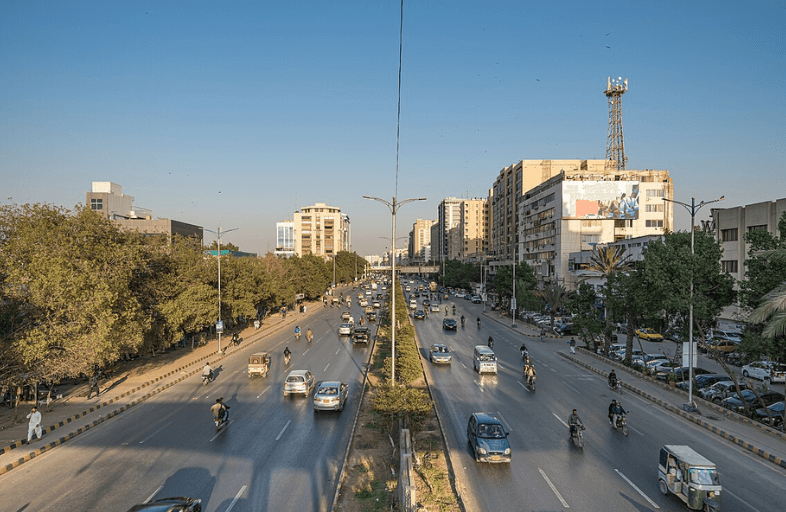
Shahrah e Faisal Road, commonly known as Faisal Road, is one of the most important and busiest arteries of Karachi. Stretching across several key areas of the city, it connects Saddar, Clifton, Korangi, and Jinnah International Airport, making it a vital route for commuters, businesses, and public transport.
From its historical significance to modern-day developments, Shahrah-e-Faisal Road is a lifeline of Karachi’s urban and commercial activity.
History of Shahrah-e-Faisal
Originally called Drigh Road, it was renamed Shahrah e Faisal in honor of King Faisal of Saudi Arabia.
Over the decades, the road has evolved into a major commercial and transit corridor, linking residential, industrial, and business zones. Its growth reflects Karachi’s urban expansion and traffic demands.
Route & Connectivity
Shahrah e Faisal stretches approximately 18–20 km, connecting key Karachi neighborhoods:
- Saddar – City’s commercial hub
- PECHS (Pakistan Employees Cooperative Housing Society)
- Jamshed Quarters
- Gulshan-e-Iqbal
- Clifton – Leading to Beach & DHA
- Korangi & Landhi – Eastern industrial areas
- Airport Road – Leading to Jinnah International Airport
It intersects with major roads like Shahrah-e-Quaideen, Dr. Ziauddin Ahmed Road, University Road, and Korangi Road.
Importance of Shahrah-e-Faisal
Shahrah e Faisal Road is crucial for:
- Daily commuters across Karachi
- Public transport routes (buses, wagons, Qinqis, taxis)
- Freight and cargo movement
- Access to offices, banks, and corporate buildings
- Linking educational institutions, hospitals, and commercial zones
It is not only a traffic artery but also a center of economic activity.
Landmarks on Shahrah-e-Faisal
Some of the most notable landmarks include:
- PIB Colony & Jamshed Quarters
- Habib Bank Plaza
- Expo Center Karachi
- Karachi Press Club
- University of Karachi (main campus entrance)
- NED University nearby access roads
- Dolmen Mall Clifton (via connecting roads)
- Karachi Stock Exchange (old building)
These landmarks make it an important reference point for locals and visitors alike.
Traffic & Commuting
Shahrah-e-Faisal is infamous for heavy traffic, especially during:
- Morning rush hours (8 AM – 10 AM)
- Evening rush hours (5 PM – 8 PM)
Public Transport Options
- Buses (Karachi Transport Co., Green Line buses)
- Ride-hailing services (Careem, Uber)
- Rickshaws & taxis
- Private cars
Despite congestion, it remains the most direct route across Karachi’s key sectors.
Commercial Areas
Shahrah-e-Faisal hosts multiple business hubs:
- Corporate offices
- Bank branches
- Car dealerships & service centers
- Shopping centers & restaurants
Popular eateries and cafés along the road cater to daily office-goers and travelers.
Hospitals & Clinics Nearby
Important hospitals near Shahrah-e-Faisal include:
- Aga Khan University Hospital
- PNS Shifa Hospital (via connecting roads)
- Patel Hospital
- Ziauddin Hospital (main campus accessible)
These make the road a lifeline for medical emergencies.
Parks & Green Spaces
Though Shahrah e Faisal is urbanized, nearby green spaces include:
- Bagh-e-Jinnah (via Saddar access)
- Quaid-e-Azam Park (Clifton side)
- University Road green belts
These spaces offer respite from the busy urban traffic.
Key Facts About Shahrah-e-Faisal Road
- It is one of Karachi’s longest and busiest roads.
- Connects industrial, residential, and commercial zones.
- Facilitates access to Karachi Airport.
- Houses important corporate, educational, and healthcare institutions.
- Known for heavy traffic, especially during peak hours.
Conclusion
Shahrah-e-Faisal is far more than just a busy highway; it is the lifeline that fuels the heartbeat of Karachi. Stretching across the city, this iconic road connects major commercial zones, corporate offices, educational institutions, hospitals, and residential neighborhoods, making it one of the most important arteries in Pakistan’s largest metropolis. Every day, thousands of commuters, business professionals, and travelers rely on Shahrah e Faisal to reach their destinations efficiently, highlighting its crucial role in the city’s daily operations.
Beyond its practical importance, Shahrah e Faisal symbolizes Karachi’s growth and urban development. It links the historical heart of the city with modern commercial districts, allowing businesses to thrive and citizens to access essential services conveniently. The road’s strategic placement enhances trade, transport, and social connectivity, making it indispensable for the economic and social fabric of Karachi.
Despite challenges such as heavy traffic, congestion, and occasional roadwork, Shahrah e Faisal continues to serve as the backbone of city mobility. Its importance extends to emergency services, public transportation, and intercity connectivity, reflecting its role not just as a road, but as a critical infrastructure supporting the lives of millions.
In essence, Shahrah e Faisal is more than a route; it is a testament to Karachi’s resilience, growth, and urban planning. As the city continues to expand and evolve, this road will remain a central artery that sustains commerce, travel, and daily life, contributing to a more connected and dynamic Karachi. Shahrah e Faisal truly embodies the spirit of Mazboot Pakistan, representing strength, progress, and the continuous drive for development in the heart of the country.