
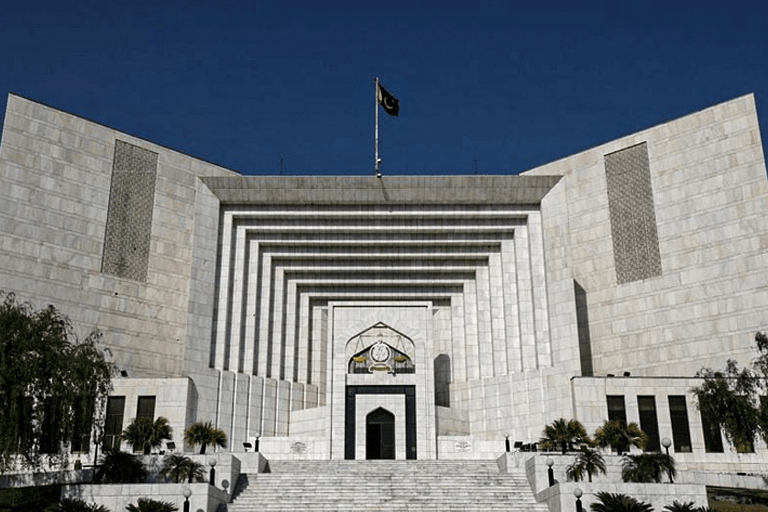
The Supreme Court of Pakistan is the highest judicial authority in the country. It serves as the guardian of the Constitution and ensures the protection of citizens’ fundamental rights. The court plays a crucial role in interpreting laws, resolving disputes, and maintaining checks and balances between the state institutions.
History of Supreme Court Pakistan
The Supreme Court of Pakistan was established in 1956 after the adoption of the first Constitution. Over the decades, it has played a pivotal role in shaping the country’s judicial landscape. The court has the power to review laws, hear constitutional matters, and act as the final appellate authority for all civil, criminal, and constitutional cases.
Structure of the Supreme Court
The Supreme Court consists of:
- Chief Justice of Pakistan (CJP) – Head of the Supreme Court
- Senior Justices – Assist the Chief Justice in deciding important cases
- Other Judges – Appointed by the President based on the recommendation of the Judicial Commission
Currently, the Supreme Court has 17 judges, including the Chief Justice.
Functions of the Supreme Court
- Constitutional Interpretation – Ensures all laws comply with the Constitution.
- Judicial Review – Reviews laws passed by the Parliament or actions of the executive.
- Appellate Jurisdiction – Hears appeals from High Courts across Pakistan.
- Advisory Role – Offers guidance to the President on legal matters when requested.
- Protection of Fundamental Rights – Safeguards citizens against violations by state institutions.
Key Cases and Decisions
The Supreme Court has delivered landmark judgments in Pakistan’s history, including:
- Constitutional petitions to restore democracy or uphold the rule of law
- Human rights cases, ensuring protection for marginalized groups
- Election disputes, clarifying the legality of election results
How Cases Are Heard
Cases in the Supreme Court are generally heard by benches:
- Full Bench – Comprising five or more judges, reserved for constitutional matters
- Division Bench – Comprising two or three judges, for civil and criminal appeals
- Single Bench – Deals with minor matters or procedural issues
Appointment of Judges
Judges are appointed by the President of Pakistan on the recommendation of the Judicial Commission of Pakistan (JCP). They serve until the age of 65 years and can be removed only through a parliamentary process involving the Supreme Judicial Council.
Recent Updates & Developments
The Supreme Court Pakistan has recently been involved in:
- Election and political disputes, ensuring free and fair elections
- High-profile accountability cases, including corruption and misuse of power
- Judicial reforms, improving case management and digitalization of court proceedings
Importance of the Supreme Court
The Supreme Court Pakistan plays a vital role in:
- Ensuring rule of law and justice for all
- Maintaining the balance of power between the executive, legislature, and judiciary
- Strengthening public confidence in Pakistan’s legal system
Frequently Asked Questions
Q1: What is the Supreme Court Pakistan?
A1: It is the highest judicial authority in Pakistan responsible for interpreting the Constitution and delivering justice.
Q2: How many judges are in the Supreme Court?
A2: Currently, the Supreme Court has 17 judges, including the Chief Justice.
Q3: Who appoints Supreme Court judges?
A3: Judges are appointed by the President of Pakistan based on the recommendation of the Judicial Commission.
Q4: What is the role of the Chief Justice of Pakistan?
A4: The Chief Justice heads the Supreme Court, presides over benches, and ensures the smooth functioning of the court.
Conclusion
The Supreme Court of Pakistan stands as the ultimate protector of justice, constitutional supremacy, and citizens’ rights. Its role in interpreting laws, reviewing executive actions, and ensuring transparent governance is crucial for national stability. From safeguarding elections to addressing human rights violations, the Court shapes Pakistan’s democratic future and strengthens public trust in state institutions. As judicial reforms expand and digital processes improve, the Supreme Court will continue guiding the nation toward fairness, accountability, and institutional balance. With ongoing support for rule of law and strong constitutional values, the Supreme Court remains a cornerstone of a Mazboot Pakistan, where justice empowers society and strengthens democracy.